
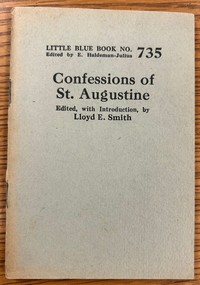
Confessions of St. Augustine by Saint of Hippo Augustine
Let's get this straight: 'Confessions' is not a plot-driven novel. It's the first major autobiography in Western history, written as one long, intimate prayer. Augustine talks directly to God, recounting his life from childhood in North Africa to his conversion to Christianity.
The Story
Augustine starts with his childhood theft of pears—not because he was hungry, but just for the thrill of doing wrong. He charts his path as a gifted student who becomes a superstar rhetoric professor, chasing success in Carthage and Rome. He lives with a woman he loves for over a decade and has a son with her, all while diving deep into philosophy and other religions like Manichaeism. The story's core is his growing intellectual and emotional discontent. He knows his lifestyle is empty, but he's addicted to his own passions and pride. The famous scene in a Milanese garden, where he hears a child's voice say 'Take up and read,' leading him to a Bible verse that changes everything, is the dramatic climax of this lifelong inner battle.
Why You Should Read It
What blew me away was how modern Augustine feels. His honesty is staggering. He doesn't hide his lust, his vanity, or his agonizing indecision. When he prays, 'Grant me chastity and continence, but not yet,' you can almost hear the smirk and feel the internal conflict. It's that human contradiction that makes him so relatable. This book is less about religion and more about the universal human experience of desire, guilt, intellectual hunger, and the longing for peace. You see a first-rate mind dissecting his own motives with brutal clarity. It’s a masterclass in self-examination.
Final Verdict
This is for the curious reader, not necessarily the devout one. It's perfect for anyone interested in philosophy, psychology, or the history of ideas. If you've ever read a modern memoir about addiction or transformation and been moved, you'll find the original blueprint here. It's also for anyone who has ever felt stuck between who they are and who they want to be. The language is dense at times (it was written in 400 AD, after all), but the emotions and insights are timeless. Keep a patient mindset, and you'll be rewarded with one of the most influential and personally revealing books ever written.
This text is dedicated to the public domain. Preserving history for future generations.
Kimberly Miller
8 months agoLooking at the bibliography alone, the logic behind each conclusion is easy to follow and verify. The insights gained here are worth every minute of reading.
Jessica Thompson
2 months agoBefore I started my latest project, I read this and the quality of the diagrams and illustrations (if applicable) is top-notch. Thanks for making such a high-quality version available.
Paul Taylor
1 month agoThe layout of the digital version made it easy to start immediately, the step-by-step breakdown of the methodology is extremely helpful for students. It cleared up a lot of the confusion I had previously.
Logan Williams
9 months agoIf you enjoy this genre, the narrative structure is incredibly compelling. Worth every second.


David Williams
1 year agoImpressive quality for a digital edition.