
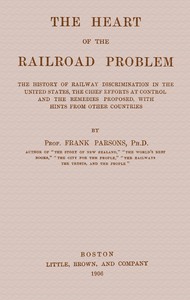
The heart of the railroad problem by Frank Parsons
Published in 1906, Frank Parsons's The Heart of the Railroad Problem isn't a novel. It's a battle cry. Parsons was a leading voice in the Progressive Era, a time when regular people started pushing back against the unchecked power of big business. This book is his weapon of choice.
The Story
Parsons doesn't tell a story with characters in the traditional sense. The main character is the railroad monopoly itself, and the plot is its rise to absolute power. He walks you through how a handful of companies used shady stock deals, secret rebates for big clients, and outright price-fixing to strangle competition. He shows how they bought influence in state legislatures and even the U.S. Senate, making a mockery of democracy. The conflict is clear: the public good versus private greed. The people—farmers, small business owners, travelers—are getting steamrolled, and Parsons is building the case for why the government must step in and take back control.
Why You Should Read It
Here's the thing that blew my mind: you could replace the word 'railroad' with 'big tech,' 'social media platform,' or 'data broker' and so much of this book would still make perfect sense. The arguments about whether a private company can have too much power over public life, the fear of their control over information and markets, the calls for transparency and regulation—it's all there. Parsons writes with the urgency of a lawyer giving a closing argument to a jury. You can feel his frustration and his hope. He's not just complaining; he's proposing concrete solutions, like having the government actually own the railroad tracks. It's a fascinating look at a radical idea from the past that makes you rethink the present.
Final Verdict
This isn't a light beach read, but it's surprisingly accessible. If you're fascinated by American history, politics, or economics, this is a must-read. It's perfect for anyone who enjoys podcasts like 'Throughline' or books that connect historical dots to modern issues. You'll come away with a much deeper understanding of why our laws about corporations look the way they do. Most of all, read it if you've ever shaken your fist at a corporate giant and wondered, 'How did they get so powerful?' Frank Parsons had the receipts, over a hundred years ago.
This historical work is free of copyright protections. It serves as a testament to our shared literary heritage.
Barbara Martinez
1 year agoUnlike many other resources I've purchased before, the data points used to support the main thesis are quite robust. A rare gem in a sea of mediocre content.









Christopher Martinez
1 year agoThis digital copy caught my eye due to its reputation, the emphasis on ethics and sustainability within the topic is commendable. A trustworthy resource that I'll keep in my digital library.