
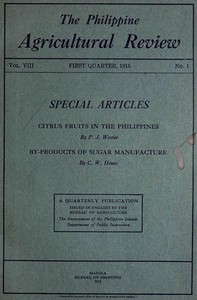
The Philippine Agricultural Review. Vol. VIII, First Quarter, 1915 No. 1 by Various
Let's be clear: this isn't a book with a plot in the traditional sense. 'The Philippine Agricultural Review' from 1915 is a primary source, a collection of articles, reports, and data published by the American colonial government. It functions as a manual and a newsletter, packed with advice on everything from fighting coconut pests to improving cattle breeds and using new fertilizers. The 'story' it tells is the narrative of a colonial administration trying to reshape the economic foundation of the Philippines through agriculture.
The Story
The journal acts as a bridge—or maybe a gently pushed doorway—between the colonial government's goals and the Filipino farmer. Each quarter, it delivered lessons in 'scientific farming.' You'll find detailed instructions on planting abacá (Manila hemp), charts on ideal crop rotations, and warnings about plant diseases. There are reports on experimental stations and summaries of new laws affecting land use. The overarching plot is a campaign for modernization, with the government as the teacher and the entire agricultural population as the intended student.
Why You Should Read It
What fascinated me was reading between the lines. The dry tone about seed selection can't hide the immense cultural and practical shift being proposed. This journal isn't just about better yields; it's a tool for social engineering. It reveals what the Americans thought was important (export crops like sugar and hemp) and how they viewed local knowledge. It's incredibly powerful to see history from this ground-level, bureaucratic angle. You're not reading a historian's summary of the period; you're reading the actual text that was sent out to provincial officials and, hopefully, to farmers. It makes that era feel immediate and tangible.
Final Verdict
This is a niche read, but a profoundly rewarding one. It's perfect for history lovers who want to move beyond kings and battles to the stuff of daily life, for anyone interested in the Philippines, colonialism, or the history of food and farming. It's also great for writers seeking authentic period detail. Don't expect a thrilling narrative; instead, come ready to piece together a story from government reports and agricultural tips. If you enjoy detective work in archives, you'll find this journal absolutely captivating.
This is a copyright-free edition. Preserving history for future generations.
Dorothy Smith
1 year agoBeautifully written.
William Martin
8 months agoAs someone who reads a lot, the emotional weight of the story is balanced perfectly. Truly inspiring.
Mary Wright
2 years agoGood quality content.
William Perez
3 months agoI came across this while browsing and the narrative structure is incredibly compelling. I will read more from this author.


Richard Garcia
2 months agoThe clarity of the concluding remarks is very professional.