About 200 minutes
The story of chamber music — Inside the Classic
Music History
45,993 recorded words. 6 minutes difference from this book's estimate.
View Gutenberg source #70203
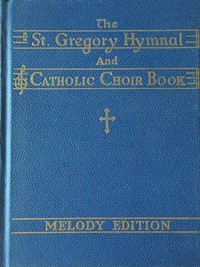
The catalog record for The St. Gregory Hymnal and Catholic Choir Book — Context and Discussion provides practical reading context through 47,238 words, 3 hr 26 min estimated reading time, and 10 detected text sections.
The text analysis averages about 12.5 words per sentence, while the detected sections provide another way to judge how the source is divided.
Project Gutenberg metadata also associates the work with “Hymns, English,” connecting these edition facts with the source record’s subject description.
Explore this collection
These alternatives are selected using recorded categories and estimated reading time.
About 200 minutes
Music History
45,993 recorded words. 6 minutes difference from this book's estimate.
View Gutenberg source #70203About 199 minutes
Music History
45,684 recorded words. 7 minutes difference from this book's estimate.
View Gutenberg source #40288About 193 minutes
Music History
44,387 recorded words. 13 minutes difference from this book's estimate.
View Gutenberg source #67545Search stored excerpts and compare books → Choose by your preferences →
Choices use stored catalog measurements. Estimates vary with reading speed. A shared category is a catalog label, not a claim that two books have the same argument or literary quality.
Search reads excerpt text stored with this catalog and links to its associated Gutenberg record. The connection is stored in the site database; this tool does not recheck that every excerpt is word-for-word identical to that external record. Excerpt search does not cover every chapter and does not verify historical publication dates.
Catalog snapshot checked: 2026-09-26. Coverage: 98 public books, 98 available source excerpts.
Calculated from edition completeness, EPUB availability, text structure and catalogue metadata. Not a user rating.
Total of 100 points, scaled to a 2.5-5.0 range. Editions with an empty description or a missing EPUB file are not scored.
Public-domain source text
The source text is kept in the dedicated reader, separate from this catalogue record and its commentary.
Nicola A. Montani's The St. Gregory Hymnal and Catholic Choir Book (1920) presents itself as a practical collection, yet its editorial voice emerges through the transcriber's notes rather than Montani's own. The transcriber, Don Kostuch, opens with a vivid memory: standing five feet from shouting organ pipes in a choir loft, a detail that grounds the hymnal in lived liturgical experience. He admits his Latin is limited to two high school years from fifty years prior, and that poetic meter may be incorrect—an honest limitation that shapes the digital edition's approach.
The transcriber's notes are the most personal element of this edition. Kostuch writes, "I fondly remember singing from the St. Gregory hymnal in grade school," and describes the organ pipes as stretching "from floor to ceiling." This recollection colors the entire project: he aims to provide a source for singers who love "old Latin hymns," calling them "Oldies, but goodies." His admission of limited Latin—"the precise meanings and poetic meter is lost on me"—is a rare moment of self-awareness in a reference work. It suggests that the digital text may contain structural errors in poetic formatting, though he claims to have "carefully compared the printed text with the transcription." The reader should approach the Latin hymns with this caveat in mind.
The hymnal is divided into English and Latin sections, each with its own index of first lines. The English hymns include titles like "Hark! A Mystic Voice is Sounding" (Advent) and "On those who at Thine altar kneel," while the Latin section lists Adeste Fideles, Ave Maria, and Kyrie Eleison. Montani's compilation is described as "A Complete Collection of approved English and Latin Hymns, Liturgical Motets and appropriate Devotional Music for the various seasons of the Liturgical Year." The dual-language structure reflects the bilingual reality of Catholic liturgy in the early 20th century, where Latin remained the official language but English hymns were increasingly used for congregational participation.
The digital edition preserves page numbers for easy reference to the original book, a departure from standard Project Gutenberg practice. The HTML index provides hymn numbers and page numbers; clicking on a hymn number takes you to the text, while clicking on page numbers displays the original page image. Image files are named systematically: N145_P226.gif indicates hymn 145, page 226. This design allows users to search by a few remembered words and find the full text. The transcriber also notes that some files contain facing pages because they are "read and sung using both pages." This attention to the physical layout of the original hymnal—a small book measuring 4.3 by 6.0 inches—shows a commitment to preserving the user experience of a choir member holding the book in hand.
Readers should treat the Latin texts with caution due to the transcriber's acknowledged limitations, but the English hymns and the indexing system are reliable. The hymnal is best used as a reference for identifying hymns by fragmentary text, or for exploring the repertoire of early 20th-century Catholic liturgical music. The personal warmth of the transcriber's notes adds a layer of affection that a purely scholarly edition would lack.
Flipping through Montani’s hymnal, I kept noticing how his dual-language index felt like a quiet bridge between two worlds—Latin and English, old and new. It reminded me of another old companion, where the incidental details, the footnotes and the margins, seemed to carry their own music. Shakespeare and Music — Edition Insights held that same unhurried patience, as if both editors simply trusted the reader to find the harmony on their own.
Save your reaction, strongest insight, and memorable passage.