About 141 minutes
Spirit and Music — Themes and Context
Music History
32,204 recorded words. 0 minutes difference from this book's estimate.
View Gutenberg source #21542
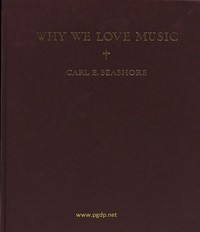
The catalog record for Why We Love Music — Text and Context provides practical reading context through 32,382 words, 2 hr 21 min estimated reading time, and 11 detected text sections.
The text analysis averages about 22.9 words per sentence, while the detected sections provide another way to judge how the source is divided.
Project Gutenberg metadata also associates the work with “Music -- Philosophy and aesthetics,” connecting these edition facts with the source record’s subject description.
Explore this collection
These alternatives are selected using recorded categories and estimated reading time.
About 141 minutes
Music History
32,204 recorded words. 0 minutes difference from this book's estimate.
View Gutenberg source #21542About 151 minutes
Music History
34,636 recorded words. 10 minutes difference from this book's estimate.
View Gutenberg source #39935About 129 minutes
Music History
29,511 recorded words. 12 minutes difference from this book's estimate.
View Gutenberg source #22089Search stored excerpts and compare books → Choose by your preferences →
Choices use stored catalog measurements. Estimates vary with reading speed. A shared category is a catalog label, not a claim that two books have the same argument or literary quality.
Search reads excerpt text stored with this catalog and links to its associated Gutenberg record. The connection is stored in the site database; this tool does not recheck that every excerpt is word-for-word identical to that external record. Excerpt search does not cover every chapter and does not verify historical publication dates.
Catalog snapshot checked: 2026-09-26. Coverage: 98 public books, 98 available source excerpts.
Calculated from edition completeness, EPUB availability, text structure and catalogue metadata. Not a user rating.
Total of 100 points, scaled to a 2.5-5.0 range. Editions with an empty description or a missing EPUB file are not scored.
Public-domain source text
The source text is kept in the dedicated reader, separate from this catalogue record and its commentary.
Carl E. Seashore opens Why We Love Music by recounting a gibe from Time magazine: psychologists had not explained why we love music. His response is not a single theory but a series of excursions into the sensory and temperamental roots of musical feeling. Seashore, a psychologist and dean at the University of Iowa, writes in a deliberately popular vein, though he grounds his claims in laboratory observation. The book is structured as a set of chapters, each addressing a factor in musical appreciation, from tonal sensitivity to the role of artistic license. Seashore is candid about the speculative nature of his generalizations, offering them as hypotheses rather than settled facts.
Seashore devotes considerable attention to the musician's heightened sensory apparatus. He describes a 'physiological irritability acoustically' that leads to a 'profuse awareness of sounds.' This sensitivity is not merely a gift but a double-edged trait: the musician finds 'infinite richness of resources for musical pleasure' alongside 'exceptional resources for the suffering of musical pain.' The text emphasizes that great musicians are 'highly sensitive to sound in all its elements,' and that this capacity is 'largely inborn.' Seashore contrasts the musician's ear-mindedness with the painter's eye-mindedness, arguing that the musician's mental life operates through vivid, stable tonal images that can substitute for actual physical sound. This inner auditory world, he claims, creates a type of isolation and a sense of superiority that shapes the musician's social disposition.
A central concept in Seashore's analysis is 'artistic license'—the idea that trained musicians hear sounds not as physical facts but as elements in an artistic context. He writes that 'the hearing of pitch, loudness, time, and timbre is not in the ratio of 1:1 with the physical sound.' Instead, musicians constantly apply 'artistic analysis and interpretation,' so that a meticulously exact performance of a Bach score would be 'musically intolerable.' Notes are 'frail symbols'; the performer must interpret even the shortest measure. Seashore identifies auditory illusions as a normal part of musical perception: pitch varies with quality, time substitutes for stress, and subjective rhythm is 'richer and far more realistic' than physical rhythm. This framework allows him to position individuality and emotional interpretation above rigid accuracy.
Seashore's approach is notably personal. He admits that his chapters 'digress from my habitual style of writing, as a technical psychologist,' and that he 'frequently indulge[s] in generalizations and predictions in a practical and popular vein.' He holds 'no brief for infallibility' and asks readers to judge what is new and true from their own point of view. This self-awareness extends to his characterization of the musical temperament, which he links to a 'general nervous, if not neurotic, disposition.' The book thus presents a double argument: that musical love arises from innate sensory and temperamental factors, and that any scientific account of it must acknowledge its own provisional nature. Seashore's willingness to label his work as 'hypotheses or at least a challenge' gives the text an unusual candor.
Readers should approach Why We Love Music as a period piece in the psychology of aesthetics—one that blends laboratory findings with personal conviction. Seashore's emphasis on inborn sensitivity and artistic deviation may strike modern readers as dated, but his core question remains open. The book is best read alongside the experimental studies he references, noting where his predictions have been borne out or revised by later research.
Seashore’s talk of the musician’s ear-mindedness stayed with me, that patient shaping of sound into feeling. It brought back an old tune from another era, where every note felt like a small, deliberate liberty. There’s a kinship there, a quiet thread between sensory precision and hopeful expression. The liberty minstrel — Context and Discussion lingered beside it in my thoughts, like two voices humming the same melody.
Save your reaction, strongest insight, and memorable passage.