1

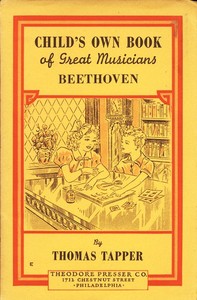
Beethoven : The story of a little boy who was forced to practice — A Reader’s Guide
(0 User reviews)
1607
Project Gutenberg
2010
Not confirmed
Beethoven, Ludwig van, 1770-1827 -- Juvenile literature; Composers -- Germany -- Biography -- Juvenile literature
Readers of public-domain and historical texts
Project Gutenberg digital edition
en
Edition facts
Words
5,494
Reading time
24 min
Text sections
1
For Beethoven : The story of a little boy who was forced to practice — A Reader’s Guide, the stored edition analysis reports 5,494 words, 24 min estimated reading time, and 1 detected text section.
The text analysis averages about 20.2 words per sentence, while the detected sections provide another way to judge how the source is divided.
Project Gutenberg metadata also associates the work with “Beethoven, Ludwig van, 1770-1827 -- Juvenile literature,” connecting these edition facts with the source record’s subject description.
Source:
Project Gutenberg record #34737
This editorial note examines the structure and recurring imagery in Thomas Tapper's biography of Beethoven, designed as an interactive cut-and-paste book for children, focusing on movement between scenes and the motif of forced practice.
Editorial Edition Score
4.4/5
★★★★★
★★★★★
Calculated from edition completeness, EPUB availability, text structure and catalogue metadata. Not a user rating.
How this score is calculated
- Description quality20 pts
- Title & short description10 pts
- Source metadata20 pts
- Text length15 pts
- Chapters / structure15 pts
- EPUB file integrity20 pts
Total of 100 points, scaled to a 2.5-5.0 range. Editions with an empty description or a missing EPUB file are not scored.
Edition quality
Read the Text
Ludwig was only four years old when he began to study music. Like children of to-day he shed many a tear over the first lessons. In the beginning his father taught him piano and violin, and forced him to practice. At school he learned, just as we do to-day, reading, writing, arithmetic, and later on, Latin.
Never again after thirteen, did Ludwig go to school for he had to work and earn his living.
Do you wonder what kind of a boy he was?
We are told that he was shy and quiet. He talked little and took no interest in the games that his boy and girl companions played.
While Ludwig was in school he played at a concert for the first time. He was then eight years old. Two years later he had composed quite a number of pieces. One of these was printed. It was called _Variations on Dressler's March_. On the title page of this piece it said:--
********************************** * VARIATIONS ON DRESSLER'S MARCH * * Composed by a Young Amateur * * LOUIS VAN BEETHOVEN * * Aged ten years. 1780 * **********************************
Then the little boy studied with a teacher named Christian Gottlob Neefe, who took real interest in him. Neefe did not, as was said of Beethoven's father, punish the little boy severely to keep him at his practice, hour after hour.
Often when Neefe had to travel Ludwig took his teacher's place as organist at the Court. Then with the organ lessons there were other lessons in Harmony. So rapidly did the boy improve that his teacher said one day:
"If he goes on as he has begun, he will some day be a second Mozart."
Our young hero of thirteen was surely busy every hour of the day. He played in an orchestra, as accompanist. He gave lessons, played the organ in church, studied the violin, and kept up his work in composition. He always kept a note-book for musical ideas.
Most every child in these days has more and better opportunities than had the great Beethoven when he was a child. Here is a picture of the funny old organ in the Minorite Church of Bonn upon which Beethoven played when he was a little boy.
Look at the funny stops at the top and compare it with the best organ in your own town. This is little better than a toy beside our fine organs of to-day,--yet it was the best that Beethoven had to practice upon.
When Neefe said that he would probably be a second Mozart the words filled Ludwig with a great desire. On his sixteenth birthday what do you think happened? Why, he set out from Bonn to Vienna, where Mozart lived.
But scarcely had he begun to feel at home in Vienna when news came to him that his mother was ill. She had always been a good mother, kind of heart, great of hope for her little boy, and probably she sympathized with the hard lot that made him have to work so early in life. When he learned of her sickness he hastened to Bonn.
Who was happier, he said to one of his friends, than I, so long as I was able to speak the sweet name of Mother and know that she heard me?
Vienna had given him a wonderful happiness. He met Mozart and had some lessons from him in composition. When he played for the great master, Mozart tip-toed from the room and said softly to those present:
"Pay heed to this boy. He will surely make a noise in the world some day."
After his Mother's death he determined that he would remain there. And it was not until he talked with Joseph Haydn, who stopped at Bonn on his way to London, that he decided once more to journey to Vienna. Beethoven was twenty-two years old at the time he met Papa Haydn. Beethoven showed the master some of his compositions. Haydn urged him to go at once to Vienna, promising to give him lessons in composition on his return from London.
Everywhere in Vienna Beethoven was a welcome guest. He was proud (but in the right way), very honest, always straightforward and independent. But, like his mother, he was warm-hearted and as true as could be. There was nothing in his nature that was mean, or cruel, or wrong in any way. He took pride in his talent and worked hard to perfect himself in it.
Here is what Beethoven's handwriting looked like.
Bit by bit, the great power of Beethoven as a pianist became known. He played much among his friends, but he did not like to perform in public.
Thomas Tapper's Beethoven: The story of a little boy who was forced to practice is not a conventional biography but a hybrid object: part narrative, part craft kit. The book belongs to the Child's Own Book of Great Musicians series, which instructs children to cut out illustrations from a separate sheet and paste them into numbered spaces, then sew the pages together with a provided cord. This physical construction mirrors the book's thematic concern with discipline and assembly—both of a life story and of a child's understanding. The title itself foregrounds compulsion, yet the interactive format invites the young reader to become an active maker of the book, not merely a passive recipient of facts.
A Book That Demands to Be Made
The book's structure is unusual: it arrives as a set of loose pages and a separate illustration sheet. The child must cut, paste, and bind the volume themselves. This process turns reading into a manual task, echoing the forced practice of the title. The instructions are precise: “Put it only on the corners and place neatly within the lines you will find printed around each space.” The child is trained to follow directions, just as young Beethoven was trained at the keyboard. The book thus becomes a physical metaphor for the discipline it describes.
Recurring Images of Home and Museum
The narrative opens with a description of Beethoven's birthplace in Bonn, “a pretty, homelike place.” But the text immediately shifts to the present: “It is now the Beethoven House, or Museum, filled with mementos.” This movement from domestic past to institutional present recurs throughout. The boy's home becomes a public archive, and the reader is positioned as a visitor to that museum. The images of the house—first as a lived space, then as a repository—reinforce the tension between private childhood and public legacy.
Movement Between Scenes: From Bonn to Vienna
The excerpts show a clear geographical progression: from Beethoven's early years in Bonn to his later career in Vienna. The text moves through key locations—the house on the Rhine, the court of the Elector, the concert halls of Vienna—but does so in a series of discrete, almost tableau-like scenes. Each location is introduced with a picture to be pasted in, anchoring the narrative in a specific visual moment. This episodic structure suits the book's intended young audience, breaking a complex life into manageable, image-supported segments.
The Motif of Forced Practice
The title phrase “forced to practice” is not merely a hook; it permeates the narrative. The text emphasizes Beethoven's father's strict regimen, though the excerpts do not detail specific punishments. Instead, the idea of compulsion is embedded in the book's own design: the child is forced to cut, paste, and bind. The blank pages at the back, where the child must “write his own story,” extend this demand. The book trains its reader in the very discipline it attributes to its subject, making the act of reading an act of obedience.
Readers should approach this book as a period artifact that reveals early 20th-century educational methods. The interactive elements are not gimmicks but central to the book's purpose: to instill facts through manual repetition. The narrative is skeletal, relying on the child's own labor to flesh it out. This edition preserves that original intent, inviting modern readers to experience the book as its first audience did—by making it themselves.
There’s something tender about the idea of a child fuming at the piano, Beethoven’s ghost looming over every missed note. That cut-and-paste format always felt like a secret handshake between young rebels and the music. I wonder if Tapper would have liked Taylor’s quieter, older reflections on the same stubborn magic. Deems Taylor — Key Ideas to Explore sits nearby on my shelf, a gentle echo.
There are no reviews for this eBook.
There are no comments for this eBook.
Reader reflection
What was your reading experience?
Capture what you thought, learned, and would like to remember.
Your progress
0
/
10
2
How did the book work for you overall?
3
Is this a title you would suggest to others?
4
What was the reading difficulty like?
5
Did the book give you something worth debating?
6
Would you read this book again?
7
What did you think about the pace?
8
Did anything about the book feel genuinely new?
9
Which lesson or insight stayed with you?
10