About 71 minutes
Cardinal Newman as a Musician — Context and Discussion
Music History
16,231 recorded words. 2 minutes difference from this book's estimate.
View Gutenberg source #26427
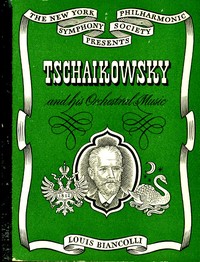
For Tschaikowsky and his orchestral music — Background and Themes, the stored edition analysis reports 16,687 words, 1 hr 13 min estimated reading time, and 4 detected text sections.
The text analysis averages about 18.0 words per sentence, while the detected sections provide another way to judge how the source is divided.
Project Gutenberg metadata also associates the work with “Tchaikovsky, Peter Ilich, 1840-1893,” connecting these edition facts with the source record’s subject description.
Explore this collection
These alternatives are selected using recorded categories and estimated reading time.
About 71 minutes
Music History
16,231 recorded words. 2 minutes difference from this book's estimate.
View Gutenberg source #26427About 68 minutes
Music History
15,581 recorded words. 5 minutes difference from this book's estimate.
View Gutenberg source #69856About 66 minutes
Music History
15,000 recorded words. 7 minutes difference from this book's estimate.
View Gutenberg source #58414Search stored excerpts and compare books → Choose by your preferences →
Choices use stored catalog measurements. Estimates vary with reading speed. A shared category is a catalog label, not a claim that two books have the same argument or literary quality.
Search reads excerpt text stored with this catalog and links to its associated Gutenberg record. The connection is stored in the site database; this tool does not recheck that every excerpt is word-for-word identical to that external record. Excerpt search does not cover every chapter and does not verify historical publication dates.
Catalog snapshot checked: 2026-09-26. Coverage: 98 public books, 98 available source excerpts.
Calculated from edition completeness, EPUB availability, text structure and catalogue metadata. Not a user rating.
Total of 100 points, scaled to a 2.5-5.0 range. Editions with an empty description or a missing EPUB file are not scored.
Public-domain source text
The source text is kept in the dedicated reader, separate from this catalogue record and its commentary.
Louis Biancolli's study of Tchaikovsky's orchestral music opens with a striking claim: the composer's life and art weave into one closely knit fabric. Rather than a dry catalog of works, the book presents analyses and backgrounds of standard concert pieces, framed by a biographical sketch. The foreword promises that the personal outlook and moods of the composer are inextricably bound up with his music, making the whole booklet an account of his strangely tormented life. This approach sets the stage for a reading that treats each composition as a window into Tchaikovsky's inner world.
Biancolli draws attention to a curious structural choice in the First Piano Concerto: the grand opening theme, introduced in D-flat major with a maestoso flourish, never returns after the initial exposition. He notes that for reasons best known to himself, Tchaikovsky never allows this imposing theme to return to the scene. This observation highlights a deliberate break from conventional sonata form, where a primary theme typically reappears in the recapitulation. The effect is a sense of dramatic promise left unfulfilled, perhaps mirroring the composer's own emotional volatility. Biancolli's analysis here is precise, grounding the reader in a specific musical decision rather than vague praise.
A recurring image in Biancolli's narrative is the blind beggar tune that Tchaikovsky heard on a street in Kamenko. The composer wrote to his patroness Mme. von Meck that every blind beggar in Russia sings exactly the same tune with the same refrain, and he used part of this refrain in his piano concerto. Biancolli identifies this as the chief subject of the first movement's main section, labeling it the blind beggar tune. This detail ties the music to a specific, humble source, emphasizing Tchaikovsky's habit of transforming everyday sounds into art. The image recurs implicitly in the discussion of folk influences, reinforcing the connection between the composer's environment and his creative output.
Biancolli's account of the concerto's premiere shifts scenes dramatically. After the tense confrontation with Nikolai Rubinstein in a Moscow classroom—where Rubinstein dismissed the work as vulgar and cheap—the narrative moves to Boston, where Hans von Bülow played the world premiere on October 25, 1875. Von Bülow's enthusiastic letter praises the ideas as original, noble, and powerful, and notes that the details do not impair clarity and unity. Tchaikovsky, reading reports of American acclaim, marvels at the healthy appetites of audiences who demanded the entire finale be repeated. This juxtaposition of rejection and triumph underscores the volatile reception of Tchaikovsky's music and the geographical spread of his fame.
In the second movement of the concerto, Biancolli points out a waltz introduced by violas and cellos. He notes that Tchaikovsky's brother Modeste insisted the theme derived from a French song the brothers used to sing. This detail, though brief, illustrates how personal memories infiltrate the orchestral fabric. The waltz appears within the Prestissimo middle section, which has the spirit of a scherzo, creating a layered structure where dance forms intermingle. Biancolli's mention of the French song adds a biographical layer, suggesting that even in a large-scale concerto, Tchaikovsky embedded intimate references. The observation is specific enough to invite readers to listen for this subtle borrowing.
Biancolli's booklet offers a compact yet focused lens on Tchaikovsky's orchestral output. Readers will benefit from listening to the works discussed—particularly the First Piano Concerto—with attention to the structural quirks and borrowed melodies he highlights. The biographical framing enriches but does not overwhelm the musical analysis, making this a useful companion for concert-goers seeking to connect the man to the music without losing sight of the notes themselves.
Reading about Tchaikovsky’s recurring motifs made me think of how certain songs anchor a movement, how a simple melody becomes a quiet home. That same gathering sense lives in The Anti-slavery Harp: A Collection of Songs for Anti-slavery Meetings — Key Ideas to Explore. It lingered for me—not as noise, but as a chorus of conviction carried gently through time.
Save your reaction, strongest insight, and memorable passage.