About 24 minutes
Wagner : The Story of the Boy Who Wrote Little Plays — Key Ideas to Explore
Composers
5,332 recorded words. 0 minutes difference from this book's estimate.
View Gutenberg source #35128
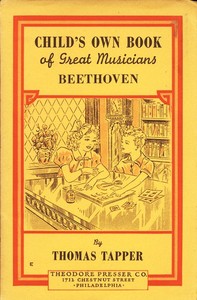
For Beethoven : The story of a little boy who was forced to practice — A Reader’s Guide, the stored edition analysis reports 5,494 words, 24 min estimated reading time, and 1 detected text section.
The text analysis averages about 20.2 words per sentence, while the detected sections provide another way to judge how the source is divided.
Project Gutenberg metadata also associates the work with “Beethoven, Ludwig van, 1770-1827 -- Juvenile literature,” connecting these edition facts with the source record’s subject description.
Explore this collection
These alternatives are selected using recorded categories and estimated reading time.
About 24 minutes
Composers
5,332 recorded words. 0 minutes difference from this book's estimate.
View Gutenberg source #35128About 25 minutes
Composers
5,521 recorded words. 1 minutes difference from this book's estimate.
View Gutenberg source #35013About 22 minutes
Composers
4,977 recorded words. 2 minutes difference from this book's estimate.
View Gutenberg source #35070Search stored excerpts and compare books → Choose by your preferences →
Choices use stored catalog measurements. Estimates vary with reading speed. A shared category is a catalog label, not a claim that two books have the same argument or literary quality.
Search reads excerpt text stored with this catalog and links to its associated Gutenberg record. The connection is stored in the site database; this tool does not recheck that every excerpt is word-for-word identical to that external record. Excerpt search does not cover every chapter and does not verify historical publication dates.
Catalog snapshot checked: 2026-09-26. Coverage: 98 public books, 98 available source excerpts.
Calculated from edition completeness, EPUB availability, text structure and catalogue metadata. Not a user rating.
Total of 100 points, scaled to a 2.5-5.0 range. Editions with an empty description or a missing EPUB file are not scored.
Public-domain source text
The source text is kept in the dedicated reader, separate from this catalogue record and its commentary.
Thomas Tapper's Beethoven: The story of a little boy who was forced to practice is not a conventional biography but a hybrid object: part narrative, part craft kit. The book belongs to the Child's Own Book of Great Musicians series, which instructs children to cut out illustrations from a separate sheet and paste them into numbered spaces, then sew the pages together with a provided cord. This physical construction mirrors the book's thematic concern with discipline and assembly—both of a life story and of a child's understanding. The title itself foregrounds compulsion, yet the interactive format invites the young reader to become an active maker of the book, not merely a passive recipient of facts.
The book's structure is unusual: it arrives as a set of loose pages and a separate illustration sheet. The child must cut, paste, and bind the volume themselves. This process turns reading into a manual task, echoing the forced practice of the title. The instructions are precise: “Put it only on the corners and place neatly within the lines you will find printed around each space.” The child is trained to follow directions, just as young Beethoven was trained at the keyboard. The book thus becomes a physical metaphor for the discipline it describes.
The narrative opens with a description of Beethoven's birthplace in Bonn, “a pretty, homelike place.” But the text immediately shifts to the present: “It is now the Beethoven House, or Museum, filled with mementos.” This movement from domestic past to institutional present recurs throughout. The boy's home becomes a public archive, and the reader is positioned as a visitor to that museum. The images of the house—first as a lived space, then as a repository—reinforce the tension between private childhood and public legacy.
The excerpts show a clear geographical progression: from Beethoven's early years in Bonn to his later career in Vienna. The text moves through key locations—the house on the Rhine, the court of the Elector, the concert halls of Vienna—but does so in a series of discrete, almost tableau-like scenes. Each location is introduced with a picture to be pasted in, anchoring the narrative in a specific visual moment. This episodic structure suits the book's intended young audience, breaking a complex life into manageable, image-supported segments.
The title phrase “forced to practice” is not merely a hook; it permeates the narrative. The text emphasizes Beethoven's father's strict regimen, though the excerpts do not detail specific punishments. Instead, the idea of compulsion is embedded in the book's own design: the child is forced to cut, paste, and bind. The blank pages at the back, where the child must “write his own story,” extend this demand. The book trains its reader in the very discipline it attributes to its subject, making the act of reading an act of obedience.
Readers should approach this book as a period artifact that reveals early 20th-century educational methods. The interactive elements are not gimmicks but central to the book's purpose: to instill facts through manual repetition. The narrative is skeletal, relying on the child's own labor to flesh it out. This edition preserves that original intent, inviting modern readers to experience the book as its first audience did—by making it themselves.
There’s something tender about the idea of a child fuming at the piano, Beethoven’s ghost looming over every missed note. That cut-and-paste format always felt like a secret handshake between young rebels and the music. I wonder if Tapper would have liked Taylor’s quieter, older reflections on the same stubborn magic. Deems Taylor — Key Ideas to Explore sits nearby on my shelf, a gentle echo.
Capture what you thought, learned, and would like to remember.